Sunday, July 19, 2026

You Can't Hurt Me if I Have No Heart: ?GLOG class? - Prince

Start with: a duelist's saber, a jacket or uniform which reflects your personal aesthetic, the power to abandon this course.

A: Heartless, Air and Darkness
B: Descent from the Moon
C: The World Ought to be Destroyed
D: Immanence
 

Heartless
You lost your heart a long time ago. Maybe it fell into one of those grates in the sidewalk, or a stranger plucked it from your chest and walked away with it, or you woke up in the hospital and were told that the doctors removed it to save your life. You don't really understand how this happened, or why.

For as long as you remain heartless, your wounds don't bleed and you don't need to blink or breathe, though you may continue to do so out of habit. If you're stabbed through the chest you can shrug it off. It won't hurt any worse than you've been hurt already.


Air and Darkness
People think hearts have something to do with love. They're wrong, or at least that's not the whole story; you can experience love just fine. There are strange things you love very fiercely, and ordinary things you no longer love at all.

If you probe the edges, try to pin down what's missing, you think your heart might have been the thing that tied you to the world. You don't care for this place anymore. You'll bear it only while you must.

For as long as this isn't where you're meant to be, you can walk on things that shouldn't bear your weight and perform impossible feats of acrobatics. You're lighter than a feather when you choose to be.

File:Black and White rose painting.jpg 
 

Descent from the Moon
There's something out there that's been waiting for you since the moment you were born. It's a place outside of time, where dreams are real and you're free of life's crushing gravity.

Your perfect world doesn't exist yet. It's a bootstrap paradox - to realize it, to make it more than just a possibility, you have to create it yourself. And to do that you have to know what you're struggling for. What impossible thing would make existence worthwhile? How could the world be redeemed?

This vision can evolve, but you can't choose anyone or anything above it. To be a prince is to want one perfect thing, to act in service of it always, to sacrifice anything that must be sacrificed to bring it about.

As long as you remain certain of your goal, you're as much an idea as you are a person, and you can cut things it shouldn't be possible to cut. This includes trivialities like steel and concrete, but you're also quite capable of parting the rain or killing your reflection.

If you allow anything to stand in the way of your perfect world, lose this ability until you decide what you actually want. 


The World Ought to be Destroyed
As compared to your atemporal paradise, the current incarnation of the universe is abhorrent. That it exists, when instead there could be something different, something better, is a cosmic injustice. You won't stand for it.

For as long as you hold the universe in contempt, your will transcends locality.

If you could draw a straight uninterrupted line between where you stand and another point in space, then for an instant you can collapse distance and make those two points the same. You could step across, or flourish your blade to cut everything between one point and the other.

This ability can be used a number of times per day equal to your Prince templates.

File:Galileos Original Moon Drawings (3053656871).jpg


Immanence
You know it. You've felt it. There's a way to change everything, if only you reach out and take it. The path laid before you may not be sane, necessary, or kind, but it exists. It is there.

You can summon a castle in the sky. It's Escheresque, not flying so much as hanging impossibly in empty air. From its throne room you command terrible powers: artillery, clockwork soldiers, great engines that loop time and space. There's a gate which could simply remake the world in your image, if you determine how to open it.

The moment you sit on that throne, you're also doomed by the narrative. It's the deal everyone makes to reach this height: become invincible, and be struck down for your hubris.

You can escape if you find your heart.

 https://i.ebayimg.com/images/g/9HIAAOSweY5mfwyQ/s-l1200.jpg

Monday, May 25, 2026

Magic Items From Scribblenauts

 https://static0.thegamerimages.com/wordpress/wp-content/uploads/2024/08/mixcollage-02-aug-2024-02-24-pm-4709.jpg?w=1600&h=900&fit=crop 

In a recent post, the Bad Doctor included this table entry:
33. a fat round bomb with a long fuse; once it goes off, it never stops exploding, forming a permanent static hellstorm of explosions.

This item is near to my heart. It has a name (it's a "resurrective bomb"), and in certain Scribblenauts games you can create it exactly as written.

If you're not already familiar, scribblenauts is a game that lets you conjure objects by writing their names. You can also include adjectives, which give the object properties such as redness, explosiveness, or indestructibility.

In this case, "resurrective" is an adjective that makes an object respawn after it's destroyed. If you apply it to an explosive, each newly-spawned bomb will get caught in its predecessor's blast radius and explode in turn, forming the permanent hellstorm Ms. Screwhead describes. Here is a crappy video of the phenomenon that I found online.

Scribblenauts is nominally about word puzzles suitable for a third grader, but the actual point of playing is to see what kinds of weird artifacts you can create. Many of my TTRPG settings are attempts to recapture this magic.


More relevantly to this post, I have an ancient Scribblenauts Unlimited save file that can be mined for magic item content:

  1. haunted blowgun: upon striking their target, the darts fired by this gun transform into ghosts. There are rumored to be alternate (talismanic) versions which summon dragons instead.

  2. spacious enveloping penny: A coin with a large internal space; maybe the objects stored inside it appear on the head side in place of Lincoln. Can swallow a whole person if you press it to their forehead, and they'll remain in suspended animation until the coin is emptied or destroyed.

  3. petrified froggy @backequipment spring boots / sonic shoes: A pair of mobility aids which simultaneously allow their user to run much faster and jump much higher. The frog jump thingy uses an illegal adjective accessible only via glitch.

  4. lightweight rideable sonic rainstick: Once per day, it can summon a solid but very fragile raincloud for the user to ride upon. It also hides the secret to an ancient weapon: lightweight rideable sonic acid rain, a version of the raincloud which corrodes anything beneath it.


  5. enveloping glass throwing knife: A hollow throwing knife designed to shatter upon impact, releasing the payload inside.

  6. cloned potion: A transparent, slightly viscous potion. If you pour a few drops onto something it will conjure a magical duplicate. It is theoretically possible to create a potion that applies any adjective; normal potions are the simplest form of antimagic; absent potions can vanish even objects that are otherwise indestructible.

  7. tiny grey sasquatch: A short, furry homunculus that can be trained to apply a potion to any creature it sees.

  8. UNTRANSLATABLE CUSTOM OBJECT - "inverse potion": Using extremely esoteric techniques, it is possible to create potions that remove an arbitrary set of adjectives from whatever they're used on.

  9. fountainlike ring: A ring with a nozzle instead of a stone, which spews massive volumes of water when twisted open.

  10. molecular immovable diamond trampoline: A floor tile which sends anything that steps on it hurtling upwards.

  11. petrified lava: A flat rock which immolates anything that touches it. Since wearing a fireproof amulet makes you immune, these can act as a rudimentary security system.

  12. tiny bouncy spiked steel ball: A sharp projectile that ricochets unpredictably. Release several in a confined space and they'll make a pretty good meatgrinder.

  13. orcish indestructible petrified tiki mask: A snarling jade mask that terrifies most non-monstrous creatures.

  14. flaming sword / hatlike fictional invisible haetae: A two-part weapon - a sword that sets fire to anything it hits, and a bound spirit that devours burning things.

  15. spiky fish-shooting minigun: A machine gun that fires spiny, metallic fish instead of bullets. The fish function as caltrops; unfortunately the gun itself is also spiky and painful to hold.

  16. fictional rifle: The idea of a gun. Can't be noticed by anyone who doesn't already know it's there, and the bullets phase through everything but their intended target. If fictional beings walked among us, who could tell?

  17. tiny handheld throwable earthbound sun: A handheld sun, typically used to neutralize the powers of vampires and werewolves. However, the lycanthropes have invented a countermeasure, a hatlike lightweight full moon that can be worn as a mask.

  18. UNTRANSLATABLE CUSTOM OBJECT - "dimensional bridge": A disk-shaped device that can be expended to insert a single 4D pathway into reality. These passages are short, look a bit like transparent ladders, and are usually best used to bypass a wall. 


  19. resurrective portal - a portal to the dungeon dimensions, stabilized so that instead of collapsing it spits out an endless series of monsters.

  20. ?disabled person?: Somewhat insensitively, this adjective-noun combination results in an undifferentiated ? symbol. If the ? is cloned, the 'duplicate' will instead be a human with random traits.

  21. tiny petrified war: A figurine of a hooded skeleton. When it is unveiled, all nearby creatures are compelled to fight each other to the death. famine, pestilence, and pollution figures also exist, but death is strangely useless.

  22. tiny petrified djinn: A figurine filled with chaotic magic. This power has random effects when unleashed, most commonly summoning random people and animals or shuffling the color and size of nearby objects. If the figurine is used for the fourth time in one day it makes fireballs rain from the sky and then vanishes.

  23. UNTRANSLATABLE CUSTOM OBJECTS - "@a / ø$ø": A pair of cursed tablets whose existence makes it possible to invoke forbidden objects and adjectives using spellcheck.

  24. dark nonliving evil @friendlytomaxwell unnoticeable (armor/ greaves / vambrace / boots / samurai helmet / evil eyes) - each part of this armor set contorts itself to attack nearby beings. They are only very narrowly prevented from directing their malice at the wearer or each other.

  25. metempsychic laser demonic crystal shiv: A relic that summons self-replicating demons shaped like random creatures and objects. Once unleashed, these beings are extraordinarily difficult to contain; they infest seams in the world from which they cannot be rooted out.

Tuesday, May 5, 2026

Remembering ideas on the go

Writing is indisputably the best way to remember things, but sometimes you're taking a walk or brushing your teeth and it'd be inconvenient to take notes. This is a quick way to lock ideas down until you're able to record them.

The premise is to plug stuff you want to remember into a bidirectional linked list. This provides structure - items are arranged in a sequence, you can recall them by following that sequence instead of dredging them from your intermediate-term memory. Each item also references the items before/after it, which provides redundancy and helps the information stick.

≈≈≈≈≈≈≈≈≈≈≈≈≈≈≈≈≈≈≈≈≈≈≈≈≈≈≈≈≈≈

The method:
For each thing you want to remember, come up with some image that represents it. For example, if I wanted to remember the first item of this table:

  • open up your skull and let your brain come out and glow with the light and heat of the sun.

I might use the image of a brain. Try to make sure it has a strong relation to the thing you want to remember; the biggest risk when using this method is that you'll recall the image but not the thing it's supposed to represent.

For the first item in the sequence, I like to imagine holding the image in my left hand. It can help to come up with tactile details - what does this thing feel like? My brain-image is squishy and wet. I can imagine squeezing it like a sponge.

OK, now we'll add the next item.

  • turn drops of blood into swords.

For this one, let's say our image is a red sword. Now we start to construct our linked list, by coming up with a way to connect the sword to the brain and vice-versa. This one's pretty easy - the sword is piercing the brain straight through.

Next item!

  • when you speak your words become stairs, if you climb them far enough you end up in the place you described.

OK, our image for this one is a spiral staircase. We've gotta connect this to the previous image in our list, the red sword, so let's say that the spiral staircase is wrapped around the sword's handle.

We'll do one more:

  • exactly at midnight, the rest of the world freezes and you can wander around and do whatever you like for an hour.

Our image can be a pocketwatch frozen at midnight. To connect it with the previous item, we'll say it's rolling down the staircase.

Every now and then you might want to reinforce your memory by going backwards or forwards through the list, image by image. There's never any need to visualize the entire sequence at once, just the current image and the connections it has with the images before and after it.

≈≈≈≈≈≈≈≈≈≈≈≈≈≈≈≈≈≈≈≈≈≈≈≈≈≈≈≈≈≈

I find these image-chains surprisingly durable and extensible. If you're so inclined, you can remember 40 things at once or reconstruct the whole sequence days after you last thought about it. Still, do yourself a favor and WRITE THINGS DOWN as soon as you can.

Memory tricks all get a bit grody if you use them many times in rapid succession. When I no longer need a sequence, I like to hold out my left arm, where I was keeping that first image, and brush it off with my other hand as if I'm scattering the whole thing into dust. I don't know if this has any practical value, but I enjoy it as a little re-centering ritual.

Tuesday, April 14, 2026

15 powers that came to me late at night

1. open up your skull and let your brain come out and glow with the light and heat of the sun.

2. turn drops of blood into swords.

3. when you speak your words become stairs, if you climb them far enough you end up in the place you described.

4. exactly at midnight, the rest of the world freezes and you can wander around and do whatever you like for an hour.

5. put your hand on someone's shoulder to walk them around like a puppet.

6. taste the history of things you eat in exquisite detail.

7. your tongue is sharp. If you cut someone with it they'll believe one thing you tell them, but they'll also probably remember that you went up to them and stabbed them with your tongue. subtler if you do it while you kiss them.

8. your shadow comes to life and strangles people who step on it.

9. if you eat a book and concentrate very hard on not throwing up, nobody can remember any of the information inside. when you lose focus you puke your guts out and people remember again.

10. fold paper animals so intricate that they are inhabited by real actual angels. If one gets smushed everyone responsible turns into salt.

11. your hands are replaced with porcelain doll hands that have retractable buzzsaws inside.

12. if you move in the direction opposite the earth's rotation you go back in time. If you move alongside it you go forward.

13. if you squint at someone with one eye you can dream of what their reign would have been like if they were a roman emperor.

14. when you speak or write it's in a different language every time and only you and the person you're addressing can understand it.

15. if you play charades with someone and act out their mannerisms, and they correctly guess that they're the thing you're miming, you can kill them and nobody will do anything about it.


after that was something about toy snakes, but before it coalesced into anything I fell asleep and knew no more.


Wednesday, January 28, 2026

Setting: Institute of Occult Sciences

There's no such thing as a surface. Instead we have the Underground: a world made of negative space, the kind of subterranean locale you're probably familiar with from many prior sources. The Underground borrows heavily from these sources and from other classic science fiction. It has its Morlocks, its ichthyosaurs, its Newts and Lemurians.

It's also undergoing a technological revolution. Clockwork devices proliferate; train tracks connect the known world; natural philosophy has started to bear strange and alarming fruit. All of it is driven by Weird Science, and most of the science is produced by an Institute that is a little anarchist and very mad.

Players are students at the Institute of Occult Sciences, or at least part of its ecosystem.


My plan is really to run this as a set of parallel duet games and furnish everyone with their own personal subplots, but here are some more generic ambitions, if you're into that:
~ Become something more-than-human.
~ Be recognized as a professor.
~ Establish yourself as a regional superpower.
~ Found or revolutionize a Science.

For extra credit: Prevent the world from being destroyed by superintelligent cuttlefish, or whatever else is metastasizing this week.

This setting is built on Laws, when I feel like it.

The Institute

  • All the rules are informal. Professorship is a social construct; there are lectures and labs but you enroll in them by showing up.
  • More advanced courses may be available only by invitation. They meet at odd times or in odd places.
  • Everyone is obsessed with something, and probably eager to talk about it.
  • Many people have sinister motives.
  • Academic disagreements are serious business.

The Weird Parts

  • "Exchange students" have no distinguishing characteristics and can only be seen in your peripheral vision. They make up about half the Institute's population.
  • We have invented messenger lizards and pneumatic tubes but not the intercom.
  • The library has many sub-levels and is full of strange objects. It tends not to be actively dangerous unless you take risks, disturb something, or break rules.
  • Tall buildings are perpetually wreathed in lightning.
  • The groundskeepers don't speak and never leave any skin exposed.

Student Life

  • Students must find a place to stay and deal with the practicalities of living there.
  • Currency exists, but most people trade favors.
  • People are always willing to show you around. They might ask for a small favor in return.
  • There are lots of extracurricular activities.

The Sciences:

There are five major Sciences. Each is a magic system made up of a bundle of interrelated techniques and setting details. If you've seen GLOG deltas (Inadvisable Decisions is my favorite) or Stolen World lifepaths it's a bit like those. More of a focus on crafting, since that is my group's particular genre of madness.

Corporeal Science: Study of biological materials. Think Victor Frankenstein or the Darwinists from Leviathan.

Galvanic Science: Study of electricity and magnetism. Nikola Tesla in a universe where the death ray actually works.

Motive Science: Study of motion, including perpetual motion. Produces clockworks, automata, terrible engines, etc.

Lucid Science: Study of information. Can facilitate remote viewing, telepathy, and SCP-esque anti/memetics.

Empty Science: Study of the nonexistent and unreal. Deeply esoteric but has practical applications in necromancy, dream-manipulation, and summoning invisible Presences.

≈≈≈≈≈≈≈≈≈≈≈≈≈≈≈≈≈≈≈≈≈≈≈≈≈≈≈≈≈≈

There are also 'secondary' magic systems which are smaller in scope or less recognized by the Institute. If I think of something cool that meshes with the Underground's aesthetics it can probably be thrown in.

d4 lesser Sciences:

  1. Verdant science. Creating Audrey II through cross-pollination, speculating wildly about why anything grows underground.
  2. Worm language. Communing with chasm-creatures via drumming and exchange of blood.
  3. Transmutative arts. Metallurgy and chemical synthesis, extracting useful substances from tidal effluvium.
  4. Aberrant cartography. Mapping the Underground, navigating non-euclidean space, dowsing for ores and ichor.

Backgrounds:

Each comes with two ~things, one functional and another that can be either fluff or a plot hook. In the race/class binary they're more race than class, but there should probably be another 1-2 that are additional flavors of human. 

Dodger: Member of an itinerant subculture that travels the underground by stowing away aboard cargo trains.
~ An old wound. If it impairs a limb or vital organ you might have a mechanical prosthetic.
~ A knack for hiding, evading pursuit, knifework, or another practical skill.

Neo-Promethean: A humanlike being assembled from salts and humours by a student of Corporeal Science.
~ A physiological defect which might be an advantage if viewed from the right angle.
~ A creator elsewhere in the Institute, now disinterested or deceased.

Morlock: An offshoot of humanity adapted to existence in lightless chasms.
~ Complicated mouthparts, customarily hidden with a scarf or a half-mask in public.
~ Lean muscle and an excellent sense of smell.

Illuminated: A person with a sliver of something unreal embedded in their mind.
~ Chronic insomnia. When you do sleep you have surreal nightmares.
~ The ability to clearly perceive things which are only half-there.

Guest: A corpse animated by sentient slime mold.
~ Extreme resilience, owing to your unreliance on human organs or metabolic processes.
~ Fragments of your host body's memories, absorbed when you ate its brain.

Cryonaut: Someone from an ancient era, entombed in a cryogenic corpse-city for hundreds or thousands of years.
~ A deep-time artifact. It might be a possession of yours or an oddity from the Necropolis.
~ A rich personal history which is now basically irrelevant.

Foundling: A lost child adopted by Lemurians. Left behind when the colony vanished.
~ Glowing eyes with complex nictitating membranes for modulating color and intensity.
~ Projective telepathy. You can transmit thoughts to anyone who meets your eyes.

Skittering: An intelligent monster that has integrated into society, typically unique.
~ A totally inhuman body-plan, and probably an alien mindset too. You might lack a social instinct or experience odd cravings.
~ An eccentric wardrobe. Clothing is a way to signal personhood and lack of hostility.

Saturday, July 5, 2025

Book Reviews, Part 1

I find new reading material mainly by lurking on discord servers, skimming blogs, and seeking out recommendation lists. So I appreciate projects like Paperback Picnic or Throne of Salt's book reviews. They're like a box of chocolates, except instead of sweets I'm being provided with new stories.

Anyway, I'm not a big review-writer myself, but I keep a log, and for purely self-interested reasons I think more people like me should share what they've been reading. So I'm going to be the change I want to see in the world by posting stuff I've enjoyed in the last 3-ish years.

If you have books you would like to recommend, or a lead on review archives yet untapped, maybe consider posting a comment. Or pinging me over discord, sending a carrier pigeon, making words appear in the dust on my windowsill, whatever floats your boat.

≈≈≈≈≈≈≈≈≈≈≈≈≈≈≈≈≈≈≈≈≈≈≈≈≈≈≈≈≈≈

Adrian Tchaikovsky:
Sometimes it feels like this guy is phoning it in, and sometimes he's great. Here I include only the ones I liked.

- Children of Time &c
Extremely good. Look it up; if the premise seems the least bit appealing to you, you should stop bothering with my dumb blogpost and read this instead.

- City of Last Chances &c
Has a lot of multithreaded plots, such that it's really more about the city as a whole than about any individual character, but IMO all the threads were interesting in their own right.

In City of Last Chances it feels very much like Tchaikovsky is taking notes from TTRPGs, probably by way of LARP, which is mentioned in his author bio. I'm not really an OSR person, just stuck here forever, but in OSR jargon I think it'd be called a powderkeg.

There are currently two sequels, which are set in different places and have a more linear feel. The second book is pretty good, if not quite up to the standard set by the first. The third is once again good, but slightly less good than its predecessor, and at this point I think the series might be starting to outstay its welcome.

- Cage of Souls
Mediocre plot-wise but the world it takes place in is cool. It's set at the end of time, where the planet is polluted and desiccated, there's one known human city, and everyone lives in the shadow of sci-fi technology they know very little about. One running theme is that life will continue to exist in some form even post-human-extinction, and there are some alien and not-so-alien creatures which are positioned as 'successors.'

I've only just started Alien Clay, and I suspect I won't like it as much, but there seems to be a lot of shared subject matter? It might be a rehash, or maybe Tchaikovsky just has a thing for heterodox academics sent to prison in a hellish environment.

- Elder Race
The best of the novellas. Short and sweet. Expert System's Brother is also decent.

≈≈≈≈≈≈≈≈≈≈≈≈≈≈≈≈≈≈≈≈≈≈≈≈≈≈≈≈≈≈

The Zahir, Borges
Borges is good in general, but this one Got me, maybe because I'm very prone to hyperfocusing, developing obsessions, making objectively small and inconsequential things into my entire world. For Borges I think this story might be about love, maybe of the unrequited parasocial variety? But for me it's about things which have permanently reshaped my brain. Fantasy novels, TTRPGs, video games, a friend's intensely elaborate paracosm that I've been gaming in since high school.

I don't know if others would find the same significance in it, but it's so short that you might as well read it and find out.


A Deadly Education (just the first one), Naomi Novik
I feel kind of weird about including this one, because it's extremely YA, and if you look at online reviews it seems the attempt at internationalism has holes large enough to drive a bus through. But when I read it I did in fact enjoy it. It feels dense, conceptually, like there's a lot of setting per page. It's also in conversation with Harry Potter, which I found fun, YMMV.

The sequels are Fine, but they lose most of these qualities, and in doing so they retroactively make it feel like the first book had less depth. Also, the romance is better when it might plausibly not be a romance, and in the second and third books that headcanon is no longer tenable.

≈≈≈≈≈≈≈≈≈≈≈≈≈≈≈≈≈≈≈≈≈≈≈≈≈≈≈≈≈≈

Susanna Clarke:
- Jonathan Strange & Mister Norrell
Very, very slow. But compelling once you've dug into it, and also quite substantial. I tend to tear through books in an a day or two once I've hit my stride, but this one kept me going for at least a week, maybe more.

Anyway! This is sort of noted in-story, but being surrounded by one's own fragment of timeless and eternal night is not really a curse. If you're a fey being with the power to immure people in darkness, please consider doing that to me, it'd be rad.

Piranesi
This has become the book I recommend to acquaintances who aren't really into fantasy or sci-fi. It's unique, well-told, and much faster than Strange & Norrell, but still rich with delicious delicious Themes.

≈≈≈≈≈≈≈≈≈≈≈≈≈≈≈≈≈≈≈≈≈≈≈≈≈≈≈≈≈≈

Zelazny:
- Chronicles of Amber
The classic. This series is a product of its era, and it's obvious that Zelazny was writing it by the seat of his pants. If you're willing to overlook those faults, it's pretty good. Might be worth reading the first few just to take inspiration from the politics-and-feuding-amongst-a-family-of-magical-immortals, if you're into that sort of thing.

- A Night in Lonesome October
A novella about a bunch of archetypal gothic horror characters trying to prevent or facilitate the unsealing of the great old ones, told from the perspective of an animal familiar. Much like City of Last Chances above, this one feels like a TTRPG scenario, and part of the reason I'm so fond of it is that it seems like the mechanics would actually be pretty solid.

≈≈≈≈≈≈≈≈≈≈≈≈≈≈≈≈≈≈≈≈≈≈≈≈≈≈≈≈≈≈

The Girl Who Circumnavigated Fairyland in a Ship of Her Own Making, &c, Catherine Valente
Yes, it's in theory a children's book, but it's genuinely amazing even as an adult. Charming, whimsical, ideas you get the urge to steal, the works. The sequels are also very good, albeit in the samey, watered-down way that sequels so often are, up until the first part of The Boy Who Lost Fairyland, which stabbed me in the heart.

I want to like Valente's other stuff, but I tried Radiance and couldn't stand it, so maybe the children's fiction nature of this series is load-bearing. I'll have to give it another go at some point.


Un Lun Dun, China Mieville
Another children's book. Not as good as Circumnavigated Fairyland, but still weird and fun.


The Night-Bird's Feather, Jenna Moran
Great, weird, aesthetic setting, lovely cast of characters, well-written, et cetera. It is maybe a little didactic, which I imagine could be grating, but I enjoyed it and recommend it.

Technically shares a setting with Chuubo's Marvellous Wish-Granting Engine, but honestly, NBF stands on its own, and I wasn't especially satisfied when I went to dig for more.


Exhalation, Stories of Your Life & Others, Ted Chiang
Lumping these together because they're all short stories. They're good, and often manage to immerse you in an interesting world despite being so very brief. Off the top of my head, my favorites were probably... Exhalation itself, Understand, the one about the tower of Babel, and maybe 72 Letters.


Star Maker, Olaf Stapledon
Do you like alien lifeforms? Unusual modes of being? This book has alien lifeforms, and also some transcendental stuff involving alternate physics and the Demiurge at the end. It's about a human narrator psychically projecting into the cosmos, where he hops from planet to planet, follows the history of the universe into the distant future, and joins with other psychic projections to search for God. It's not really a traditional narrative, but it's still very fun.

...also it feels like it's part of a microgenre alongside All Tomorrows. I'm still looking for a third example, maybe throw me a comment if anything comes to mind.


The Library at Mount Char, Scott Hawkins
This one makes a lot of questionable decisions. A lot. But as is thus far the theme of these reviews, I really like nonstandard fantasy worlds with a lot of conceptual density, and it turns out that I'm willing to look past some flaws if you give me one of those to toy with. Library at Mount Char is good in that way, even if (spoiler alert) it leaves you wondering why anyone would think "it was necessary to test the worth of my successor" justifies all abuse and forgives all sins.


Neal Stephenson:
- The Diamond Age
- Anathem
The Diamond Age is great so long as you ignore the ending, and maybe all the stuff related to the Drummers. Anathem is also great, and I was only tempted to ignore a few pages of epilogue.

Come to think of it, Anathem reminds me of Norrell & Strange, in that it's long, meaty, and very much a philosophy piece (like how N&S is a period piece). Anyway, rare case where Stephenson mostly sticks the landing.


Permutation City, Greg Egan
Really a philosophical idea dressed up as a story, with a nothingburger ending. It's a cool idea, though.


Tuesday, May 13, 2025

50 Purchases From the Goblin Market


1. Creature which resembles a telepathic and prehensile wig. It feeds on dandruff.

2. Rag doll which is legally your firstborn child.

3. Goblin coins. Indistinguishable from the real thing except that they have the taste and melting point of chocolate.

4. A foul breeze. The smell is intense enough to cause nausea; it has the personality of a very dumb and very loyal dog.

5. The deed to a bridge, location unspecified.

6. Goblin fruit. Sort of a carrot-ish potato pumpkin thing. If you eat the seeds they start growing in your stomach.

7. An evil kitten.

8. Broken shards of mirror-glass. If you're cut by one you have to put your hands on your head and hop in a circle or it's seven years of bad luck.

9. Stepladder cursed to fail you when you need it most.

10. A homunculus. Knee-height, will follow orders if they're written on a piece of paper and fed to him. Contradictory instructions cause indigestion.

11. Use of a magic chariot for seven days and seven nights. On the eighth day it breaks free of all earthly ties and flies into the sun.

12. An unbreakable, unfoolable, unopenable lock.

13. A witch's iron eyeteeth. Wickedly sharp, rattle alarmingly in the presence of bad juju.

14. Coin that always lands on its edge.

15. Novelization of your life up to this moment. The sequel was critically panned and is no longer in print.

16. A stolen bicycle.

17. Cardboard box which holds a very small and gullible angel.

18. Turkish delight.

19. A reanimated snake skull. Very bitey.

20. A perfect skipping stone.

21. Lava lamp with real molten rock inside.

22. Rubber bugs that come to life when you take them out of the tube.

23. A flaming axe, but the handle ignites instead of the blade.

24. Loaf of bread containing three rocks, a razorblade, and a spider.

25. Dead phoenix wrapped in a fire blanket.

26. Loom that weaves gold into straw.

27. A lemon.

28. Realistic fascimille of your own severed head.

29. Matchsticks which produce lots of oily smoke but no flame.

30. Fisheye paint. Distorts the apparent proportions of anything covered with it; has no effect on color.

31. Two-dimensional sword. Very sharp, very brittle, difficult to hold without losing fingers.

32. An ant farm with tunnels shaped like letters. The ants claim to be superhumanly intelligent, want out of the box.

33. Certificate of marriage to Old Man Winter.

34. An eleventh finger.

35. Parrot with an encyclopedic knowledge of swear words.

36. Divisibility cloak. Allows its wearer to harmlessly detach and reattach limbs.

37. A spell whose only function is to remove itself from the caster's memory.

38. Glowstick that emits gamma radiation.

39. Fake vampire teeth that give you the ability to heal by drinking blood. After each use, save or develop a dependence.

40. Scrap of paper which describes your worst enemy's worst sin.

41. A haunted dollhouse.

42. Paper-mache gorgon mask.

43. Indelible ink. Can't be erased, washed off, written over, or scraped away.

44. Bucket of holding filled with 64 cubic feet of molasses.

45. Magnificient robes struck by a curse of selective visibility.

46. A chitinous violin. It can play insect noises (crickets, cicadas, etc) but not any human music.

47. Talking lockpicks. Rude, judgemental, will briefly scream in pain if broken.

48. Violently explosive bubblegum.

49. Nutshell containing an infinitely spacious pocket dimension.

50. Canopic thimbles housing the mummified organs of a pixie queen.

Thursday, February 6, 2025

1d20 Invisible Planets


 1. The vulture moon. Circles buzzard-like beneath the horizon and feeds on ghosts. Will trade you the thing you want most for the thing you most need.

2. A gas giant that's slightly out of phase with the known universe, detectable only by the manner in which its gravity distorts other orbits.

3. A star-cinder: It fell into the sea and guttered out. On stormy nights the leviathans dredge its corpse back up and parade it through the western sky.

4. A puzzle-box of planetary scale, now disassembled. The pieces were buried in nearby moons.

5. Hyperhyperborea: An ice giant visible to stargazers only in the uttermost north. It wobbles between past and future pole-stars, carrying the details of their conspiracy to overthrow Polaris.

6. A boltzmann planet that exists for an instant at a time, appearing and discorporating far too quickly to be seen.

7. Chiraldia: A planet made of frozen mercury that only exists in mirrors. To set foot there is to trade places with your reflection.

8. A comet formed from ice so pure and clear that it is undetectable to the naked eye.

9. Euryale: A dim, faraway planet that tutors witches and transforms infants born under its auspices into monsters. Astronomers who examine it too obviously or for too long tend to die in their sleep.

10. A rocky planet that is sending a message in morse code by varying its albedo. This operation is taking place on a geological time scale; the periods of darkness between dots and dashes last centuries.

11. Aculeata: A star that emits no visible light, but which is terrifically bright in the ultraviolet, such that its focused attention can cause sunburns and blindness. Believed to have made an ancient pact with bees.

12. A nameless, ruined world, inhabited only by a starving god. All thought that references it is devoured.

13. The planet that would exist in place of Mars, if a butterfly had flapped its wings five billion years ago. It houses a thriving post-scarcity civilization, observable only through a prism that refracts possibilities.

14. Rorschach: A black moon that creeps through the spaces between stars. People hold impromptu masquerades when it is high in the sky.

15. Passerine: A magnetic planetoid that the Earth swallowed whole in a fit of youthful hunger. When its strength waxes it takes control of birds and forces them to fly straight upwards until they die of exhaustion.

16. A star that wears a veil of dust to hide its beauty. Poets spend months training telescopes on its region of space, hoping that the rings and nebulae will part to afford them a glimpse of its splendor.

17. Chfled: A moon that shines in hell. It illuminates the crossroads and graveyards where devils work, and is seen most clearly by the hubristic, the foolish, and the desperate.

18. Meinong: A planet populated exclusively by impossible things. If something is done for the first time elsewhere, the version of it that exists on Meinong disappears: ergo, it might emerge from hiding if someone were ever to invent a whole-planet invisibility cloak.

19. A star that makes noise instead of light. On quiet nights you can hear it mumbling.

20. Skynest: A rogue planet steered through space by a species of telepathic moths. It stands behind the sun, waiting for the latest generation to emerge from their chrysalises so that they can disassemble and archive the Earth.


Tuesday, November 5, 2024

50 Magical Paradigms

I like magic that's weird and complex and entwined with the setting in which it exists. Usually, I make something bespoke for every game I run - you can see an example here.

This is at odds with the standard D&D approach, where there's a list of somewhat arbitrary spells that get taken out of the box and used as-is, without much room for additional depth.

The local blogosphere is a bit better. There are lots of posts out there that think about what magic actually entails, or which go for an interesting aesthetic, or which have a solid thematic throughline.


There are two models I see a lot. The first conceives of spells as invisible critters that a wizard keeps locked up in their brain or spellbook. My favorite writeup is this post by Coins and Scrolls, which is incidentally also very in tune with my philosophy as regards magic-related worldbuilding.

The other old standby is Magic Words, which I think I first encountered via Papers and Pencils here. (There are more fleshed-out versions elsewhere, but unfortunately not any that have stuck in my long-term memory). This one posits that wizards learn spell-fragments, in the form of words like "fire," "missile," or "door," which they can then piece together to write their own spells.

I like these frameworks well enough, but I've seen them both re-iterated several times, and I wish there was more variety, or maybe more willingness to create something weird and out-there. 

I also enjoy coming up with this stuff for its own sake. So here are brief descriptions of 50 paradigms, most of which are at least loosely compatible with standard magic rules that assume wizards exist and are people who cast spells.

If any of these paradigms catch your eye, then maybe think for a moment about how you'd expand on them, or what the implications might be for a setting that uses them.

----------------------------------------

Spells are...

1. Supplementary lobes grown in the brain using meditation and mnemonic techniques.

2. Fragments of the stolen mind of God.

3. Formulae describing a manner in which the delicate and volatile balance of cosmic forces can be safely manipulated.

4. Impossible sleights of hand invented by the King of Thieves.

5. Sorcerous bloodlines unlocked by convincingly fabricating the presence of a deity or lesser spirit in one's family tree.

6. Astrological rituals that invite the influences of the seven elemental planets.

7. Three goblins in an invisibility cloak.

8. Proofs that natural law is false or self-contradictory, promulgated by demonic philosophers.

9. The cobbled-together scraps of lost extrauniversal sciences.

10. Echoes of the word that brought the universe forth from primordial darkness, bounced back and forth across the cosmos from the day of creation until they were finally caught and decanted into jars.

11. Commands issued to a system of menhirs and henges empowered by ancient infrastructural rituals.

12. The sacred mysteries of dead, dying, or forgotten gods.

13. Ab-logical insights arrived at by taking psychedelic drugs or staring for too long into the depths of the chaotic planes.

14. Writs that empower eligible persons to make wishes with specific predetermined wordings.

15. Good advice given by someone at least a hundred years old.

16. Keys to various seals and limiters that were placed on mortals to prevent apocalypse.

17. Cheat codes for the universe simulation.

18. Koans, the contemplation of which allows one to perceive and transcend the illusionary nature of reality.

19. Astral weapons designed to be implanted in a soul.

20. Hyperdimensional structures that snap back into conventional spacetime when cast.

21. The caster's own externalized thoughts.

22. Chemical poultices and powders with a bit of something extra mixed in.

23. The secret arts of smiths, clockmakers, masons, etc.

24. Services provided by residents of the goblin market in exchange for items that suit their peculiar and highly specialized tastes.

25. Talismans prepared according to a series of exacting instructions and charged with the caster's will.

26. Phrases a bit like "abracadabra!" or "open sesame!" which for some reason only stick in the minds of the initiated.

27. Bullets etched with sigils and words of power, which ascend to a higher plane of existence upon being fired.

28. The misfortunes that escaped from Pandora's box.

29. Techniques learnt by beating a monster at its own game. (Defeating a basilisk in a staring contest, a giant in an arm-wrestling match, etc).

30. Favors that Entropy bestows upon those who hasten the world's decay.

31. The forms of a proscribed martial art that unbalances the vital energies of its adherents.

32. Sluglike things made of animate ink which pour forth from a spellbook to do the caster's bidding.

33. Objects or entities sealed within an extradimensional space in the wizard's hat.

34. Bizarre, temperamental devices that require constant maintenance and recalibration.

35. Pharmaceutical cocktails that briefly grant the imbiber psychic powers.

36. Patterns of mana that behave like cellular automata. Magic missile is a glider.

37. Parapsychological mutations induced by exposure to mythos entities.

38. Miracles worked by the various saintly relics that the caster keeps about their person.

39. Applications of the force exerted upon reality by purely mental phenomena such as perception or intent.

40. Demiplanes smaller than the head of a pin which follow altered laws of physics.

41. Stakes won from a set of anthropomorphic personifications that the wizard gambles with in their dreams.

42. Thaumic technology smuggled from the sunless lands beneath the sea.

43. Things the wizard sees with the eye they sacrificed for forbidden knowledge.

44. Divine retribution that the wizard directs to their own ends by tricking the gods with meticulously chosen blasphemies.

45. Otherworldly communications encoded in the movements of birds, the patterns of fallen leaves, the letters of magazines.

46. Hypnotic patterns inserted into the collective unconscious.

47. Things left over from previous iterations of the universe.

48. Secrets that you can only understand by emulating the mental architecture of an octopus.

49. Bursts of chaotic magic that in their natural state could do absolutely anything, but which the caster circumscribes with probability manipulation.

50. Ritualized dialogues that will persuade some vast and inhuman being to grant the caster a boon if executed correctly.


Tuesday, February 27, 2024

How to Play By Post

 It recently occurred to me that I have about a decade of experience with Play-by-Post (PbP) games. This seems kind of absurd to me: I'm young enough that I don't usually think of myself as having decades of experience in anything, aside from all the life-support stuff like eating and sleeping and reading.

Anyway, this realization was prompted by @cole1312 on a certain OSR discord server, who requested resources on running PbP games. Such resources exist, but I hadn't yet written one. This is what I'll point to if I see a similar request in the future.

If you're new to PbP games, the essentials are all in the first four sections - Setup, The Gameplay Loop, Momentum, and Things You Should Know.

The Advanced Topics are just a couple of weird things that I've done in the past, or that my groups occasionally do. You can think of them as a sort of human interest piece. Though if you try them, or if you've ever done something similar, I definitely want to hear about it.


Setup:

The simplest possible setup is a discord channel, forum thread, or email chain where players post actions or dialogue and the GM posts turns. Unless you're running your game on a forum and expect only a token amount of discussion, you'll also want an Out-Of-Character (OOC) backchannel. 

Each platform has different advantages and disadvantages. A forum thread is easy to keep track of and makes a great archive, but discussion will be slow. In Discord communication is very fast and you can create as many channels as you want, but old material rapidly gets buried.


The Gameplay Loop:

Gameplay in PbP games works a lot like gameplay in person, but for practical reasons it needs to be a little more structured. Additionally, the GM customarily rolls all dice. This speeds the game up a bit and eliminates awkward situations where you need to worry about honesty.

The basic loop is:
1. The players all post actions.
2. The GM rolls dice, writes up the results of each action, and posts them. This is a turn.
3. Return to step 1.

Sometimes the GM may respond to individual actions outside of the turn structure, if the action in question is something very minor that shouldn't take a full round. This is most frequently applicable to conversations, since waiting an entire turn between each line of dialogue would be far too slow.


Momentum:

It's very easy for a PbP game to slow down, and when that happens, it becomes increasingly likely that the game will grind to a halt and die. So, the most important part of running a PbP game is to keep the momentum going.

The root of the problem is that, by default, PbP games have very little time pressure. There's no expectation that anyone will do anything at any particular time, so it's easy for players to put off writing an action or for the GM to put off writing a turn.

My solution to this is to create a schedule. Choose when to post turns: every day after 9:00 EST, or on certain days of the week, every other Saturday, et cetera. Whatever works for your group. Then skip players who haven't posted by that time.

Skipping players doesn't feel great, but if you aren't willing to do it, your game WILL be held up by one person who never gets around to posting an action.

Lost momentum is difficult to recover. If your daily schedule slips and you begin posting turns every three days, players adjust to having the extra time. You'll have a hard time getting them to submit daily actions again, and in practice you may have trouble getting yourself to write turns more frequently. If there are long enough gaps between turns, people will also forget what's going on and may have trouble reengaging.


Things You Should Know:

PbP games are very slow. In person, it takes a few seconds to go through one iteration of the gameplay loop. In a PbP game it will generally take at least a day, and often much longer. An adventure that could be run in one or two sessions might take months to finish asynchronously.

Because an entire turn's worth of actions are processed simultaneously, PbP doesn't play well with systems where a single action or round of combat requires multiple branching decisions. The wizard can't decide to cast a counterspell mid-round if an enemy is about to throw a fireball, because "mid-round decisions" don't exist. The best you can do, in this case, is to let players make parts of their actions conditional. "I climb the ladder - and if I see the enemy wizard casting an offensive spell, I pause to counter it."

As the GM, you're probably doing a lot of rolling and bookkeeping that the players would normally keep track of themselves. Choose a system which won't make that unnecessarily difficult. One modifier per roll is manageable. Juggling two or three per character per turn gets old fast.

PbP games are, in my opinion, an underexplored medium, and you can use them to do a lot of really neat stuff. To list just a few possibilities, specifically ones exemplified by games that I've more recently played or run:
- PvP games that make heavy use of private channels and hidden information.
- Games where the "party" is somewhat nebulous and each player is free to pursue their own agenda
- Games with elaborate setting mechanics that reward a lot of thought and planning.


Advanced Techniques:

Inventory Management:

If your game has extensive bookkeeping needs, you may want to use Google Sheets. This allows you to create spreadsheets that anyone with access to the link can view and edit, which means you can fob a lot of that bookkeeping off on your players.

This sounds a lot scarier than it actually is. Your spreadsheet basically needs three fields: Name, Description, and Additional Notes. If you're tracking items you may want another field or two for quantity or monetary value or what-have-you.

Here is one of mine, from a game I've spoken about before.


Turn Anarchy:

Don't wait to do a full turn. Respond to actions as quickly as players post them.

This is a very intense experience. If you have enough players, and if your game is moving fast enough, chances are that at least one of them will be around at any given time. You can, in theory, have unlimited TTRPG. As much TTRPG as you want. Be very careful.

If you ever decide to do this:
- You will probably want to use a text-based chat program in which you can create many different channels. Practically speaking I mean Discord, but if you have a suitable alternative then go for it.

- Each player gets their own IC channel. This is important, because the game will move at different rates for everyone, and it will move very fast. Trying to use a single channel is mentally taxing, makes you lose track of actions, and is overwhelming for your players.

- There won't really be a "party," as such. Sometimes players might work together.

- Use a very simple system. Mine is "roll 1dX to resolve uncertainty, higher is better."

Lastly, most seriously: Set boundaries with your players and with yourself. Continue to do stuff other than your game. Make sure you're getting enough sleep. This was incredibly fun for me, on the few occasions I've been in a position to do it, but you really, really do not want it to get away from you.

Wednesday, January 3, 2024

Settingpost - Scrap: Industrial Magic

The following is a description of an asynchronous play-by-post game I ran for a while, with a few elaborations and extras.

It's from the perspective of advising someone else who might want to run a game in the same setting, mostly for my own convenience while writing. That said, it might be a decent example of how to manage a magic system that uses very little abstraction.


The Premise:

The players are a group of Machinists, tinkerers who build wonderous devices from metal, runes, and soulstuff. They scrape out a living at the border of the Waste - a perilous, continuously shifting magical wasteland that was created decades ago by the impact of a falling star, and which has since been used as the dumping ground for an empire's worth of faulty devices and alchemical pollution.

Thaumaturgical surveys have detected an anomaly at the center of the exclusion zone, something with a magical signature far stronger than any machine yet created by mortal hands. It could merely be a danger - but it could also be the key to controlling the forces that shape the wasteland, or to reproducing the cataclysm which created it.

The players, for reasons known only to themselves, have decided that the prospect of getting their hands on those secrets outweigh the considerable risk of mounting an expedition past the Waste's outermost edge.


The Magic System:

Every thinking being has a soul, a sort of aetheric nucleus which houses their memories and personality. The souls of beings with a physical body are typically entangled with their brain (1), but there also exist disembodied souls, more colloquially known as spirits, which are capable of persisting without a body to anchor them (2).

Souls naturally generate thaum, magical energy that can be used to power runes or sorcery.

Each rune has a name and a function. To power a rune with your own soul, you need only touch the rune and will it to be so - but this is an exhausting process, and human souls have only so much energy to spare. More powerful devices often make use of bound spirits, entities confined by runic enclosures that drain thaum and induce a sort of dreamless sleep. The practice is ethically dubious, but effective - as fueling more advanced creations otherwise requires inefficient thaumic batteries or simultaneous contributions from many operators at once.

Conversely, sorcery is performed by channeling thaum through knots that have formed in one's soul. Each knot is an clot of aetheric structure that embodies a particular concept, and prospective sorcerers must form them by taking part in initiatory rituals, undergoing ordeals, or engaging in obsessive study. There is also the unwise route of experimental soul-surgery.


Gameplay:

When I last ran this game, the party started play with an airship. It may be preferable for them to remain earthbound, in which case I would instead provide a crawler or an automobile. Access to a single large vehicle is an important part of the setup - it forces players to work together, always a consideration in play-by-post games that are freeform enough that characters could easily wander off in different directions. It also acts as a mobile storage space and workshop, in a setting where crafting is an essential part of gameplay.

I might give players a choice between a few transports with different strengths and weaknesses. Most of the options available in-setting will be bulky constructions that operate by harnessing the power of a bound spirit, but if the table is particularly averse to that idea, it's possible to acquire a lightweight vehicle that can (effortfully) be run with thaum from the characters' own souls, or a somewhat awkward mundane conveyance like a zeppelin or steam-powered cart.

It is also essential that players have tools that allow them to shape wood, stone, metal, etc so that they can create runic equipment. These tools are themselves likely to be runic devices. My go-to option is a runic array shaped like a set of interlocking rings which allows the players to deform matter held within it.

The Waste is ideally represented by a hexcrawl, but one where the hexes change periodically. Locations are occasionally shuffled around by dimensional instability. Spatial anomalies aside, hexes can also suddenly be contaminated with extradimensional flora and fauna, blasted by storms, terraformed by buried machines, or altered by spirits. The longer players spend in one place, the less the landscape behind them will look like the one they originally passed through. Environmental hazards are common and varied.

Ideally there should probably also be other factions attempting to reach the Center. I haven't run that variation, though so unfortunately there aren't any further details to go into.


Running Runes, Sorcery, & Spirits:

I have provided a list of some runes I used at the bottom of this post. I don't necessarily endorse including all of them - Reservoir in particular is one that I would strip out if I were to run the game again, as it makes storing thaum for later use too straightforward. There are also many redundancies, because I allowed players to formulate variations of runes they already knew. I have stripped out the worst offenders.

There is a core set of runes that the players should be provided with at the start of the game. These are runes which serve essential functions, like the "transfer" symbols that, when chained together, act like wires that can run thaum from one part of an object to another, making it possible to control a large device via a contact point in the handle or console. 

These core runes are:

Transfer (for transferring power to other runes)
Dissonance (for binding spirits)
Cage (for holding a bound spirit in a hollow container)
Projection (as a basic way to manipulate thaum)

There should also be something that lets players make simple weapons - I used "burst," which acts as a basic force gun, but something like a sharpness rune would also work fine.

Players should be able to acquire a new rune or two by taking apart any runic device they find. The GM should also ideally be able to say a few words about how the device works. For example, a bomb might be triggered when plates bearing two halves of an explosive rune are allowed to touch.

Runes can be written in any medium - painted, embossed, engraved, et cetera - so long as it's possible to reproduce the rather intricate symbols in fine enough detail.

Thaum dissipates quickly in empty air, unless there is an ongoing effect that preserves it.

Sorcery is more freeform. As described before, knots are gained from initiations, study, ordeals, and soul-surgery. The key is that an experience must reshape your soul - either directly, via exposure to spirits, high concentrations of thaum, or surgical modification, or indirectly by changing the sorcerer's identity. Each knot corresponds to a particular concept - "life," "rage," "annihilation," "force," "plants," and so on - and can be invoked to cause effects related to that concept. Finesse is difficult and must be trained, as must more exotic interpretations of the concept in question. Generally, a sorcerous spell must promote or manipulate the concept it's associated with, and cannot directly reduce or eliminate it. A sorcerer with a rage Knot could induce rage or redirect it, but would be incapable of soothing it.
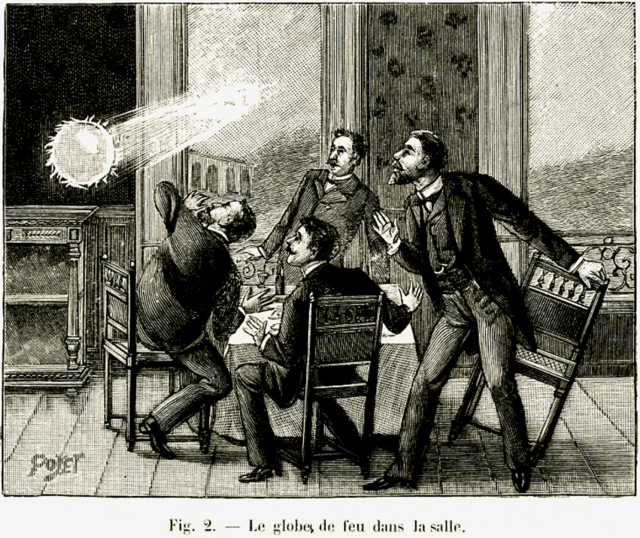
Spirits can look like more or less anything. They also have varying levels of intelligence, ranging from that of a plant to that of a superhuman mastermind. Their bodies are incorporeal, essentially aetheric shells filled with thaum. They can be harmed by physical objects, very inefficiently, but to truly hurt them it is generally necessary to use attacks that make direct use of thaum, a more conceptual effect like those associated with sorcery, or runes like Dissonance that influence the soul directly (3). This requirement is more flexible than it may seem - with sufficient force behind it, even a charged line of Transfer runes will do. Spirits almost always have supernatural abilities equivalent to those of sorcerers.

Spirits originate from the space between dimensions, and sometimes cross into reality in places where dimensional boundaries are thin (this happens frequently in the Waste). The crossing and subsequent adaptation to conditions within reality is difficult: some spirits fizzle out within moments of arrival, and those that survive rarely have comprehensible memories of the Outside.


There are really no further rules. Players can make any runic device they can comprehensibly (and COMPACTLY) describe - the GM pictures it and uses their understanding of the setting to determine whether it works, and if not, to determine what goes wrong. Expect some very creative problem-solving: one of my players designed a gun that shaped Thaum into Dissonance runes and fired them at the spirits they were going to fight. There will also be some getting lost in the weeds.


The Ending:

The object at the center of the wastes is a massive titanium sphere, cracked and partially disintegrated, illuminated by flares of escaping Thaum and covered entirely with celestial runes. All astronomical bodies in this setting are actually mechanisms of vast and abstract power. Stars, in particular, are meant to reinforce and manipulate dimensional boundaries. This one broke when it fell from the sky, and its death throes are causing the dimensional instability characteristic of the Waste.

The things that would be possible for someone who controlled or studied this device scarcely bear contemplation, and are certainly outside the scope of this game. Successfully laying claim to it is a win condition - provided that the players can do so before some other group beats them to it.

Footnotes:

(1): The brain acts as a sort of metaphysical scaffold, keeping the soul firmly anchored to the physical body and supporting it as it grows. Damage to that scaffold - of the sort that might be caused by asphyxiation or blunt force trauma - will also affect the soul, in much the same way that knocking out a load-bearing wall would affect the structural integrity of a building. 

(2): Great thaumaturges from ages past are said to have been able to disentangle brain from soul in order to become spirits themselves, but modern experiments with this aim have been less than successful.

(3): Human souls can also theoretically be harmed by these sorts of attacks, but are resistant to them as a result of being anchored to the body. Soul-surgery is usually performed either sorcerously or with implements that produce highly concentrated and intense thaumic effects


Sample Runes:

Transfer: Transfers thaum to the rune ahead of it. Can be chained together to transport thaum over the surface of an object.

Dissonance: When directly touching a spirit, loosens its control over thaum. Self-sustaining once the spirit can no longer prevent the thaum it generates from activating nearby runes.

Cage: When repeatedly scribed on the outside of a container, creates a stable shell of thaum that can hold a spirit in place.

Projection: Launches thaum outwards, perpendicular to the surface the rune is printed on.

Burst: Consumes thaum to launch a blast of force.

Pressure: Exerts even force on whatever is in front of the rune, with intensity that scales directly with the amount of energy that is used.

Fork: A modified transference rune that divides energy into two equally-sized steams. Used to regulate the overall level of energy that is fed to each component.

Reservoir: Energy seems to build up in this rune, forming a pool that nearby transfer runes can draw from. Used to reserve energy for maneuvering and stabilize the engine's output.

Forcefield: Consumes thaum to generate a flat plane of solid force.

Foam: Creates small bubbles of thaum.

Halo: Concentrates thaum several inches above the rune.

Clot: Causes energy to stick together and accumulate.

Linkage: Directs magic towards matching sigils on other devices. Slight variations in the dots at the center of this rune can be used to connect it to different networks.

Clairaudience: A scrying rune that allows the being powering it to hear all sounds it's exposed to.

Waste: Consumes thaum.

Ray: Consumes thaum to fire a beam of destructive magic.

Unburden: Consumes thaum to reduce the weight of whatever it is printed on.

Ooze: Consumes thaum to produce toxic sludge.

Arc: A targeting rune that makes magical effects curve towards whichever direction the glyph is pointing.

Partition: A rune that repels energy. Powering it is difficult. The designers of the Thaumic Forge resorted to a long chain of Projections.

Valve: A Transfer variant rune that restricts the flow of Thaum. Its output can be adjusted by varying the angle of two specific lines.

Oculus: Powering this rune with your own energy allows you use it as an additional eye.

Kinesthesia: Powering this rune with your own energy allows you to sense its approximate location.

Spark: Consumes energy to create a concentrated ball of electricity.

Bolt: Consumes energy to create a lightning bolt.

Fog: Consumes energy to create an expanding cloud of mist.

Kamikaze: Consumes energy to violently shatter the object it's printed on.

Smelt: Consumes energy to heat up the surrounding area.

Enervate: Weakens and disrupts any spirit that is directly exposed.

Scorch: A rune that consumes energy to produce flame.

Blindsight: A divination rune that provides the person fueling it with a blurry image of everything within a five-meter radius. It is not affected by light, or the lack thereof.

Shockwave: Consumes energy to create a surge of destructive magic.

Attract: Consumes energy to pull at any object that's in front of it.

Confine: A ring of runes that prevents objects from leaving their area of effect.

Reinforce: Consumes energy to increase the durability of the object it is printed on.

Cruor: Transforms energy into blood.

Volatilize: A ring of six runes that consumes energy to make objects more explosive.

Sustain: Consumes energy to prevent a spirit from deteriorating.

Squall: Consumes energy to generate gusts of wind.

Tar: Transforms Thaum into flammable pitch.

Frost: Transforms Thaum into ice.

Blacken: A ring of six runes that consumes Thaum to make objects a darker color.

Filigree: A ring of six runes that consumes Thaum to cover objects in intricate black lines.

Shroud: A rune that consumes energy to surround itself in magical darkness.

Empathy: A divination rune that forms a weak telepathic link between all entities who are currently powering it, allowing them to sense each others' emotions.

Lifesense: A divination rune that allows the entity powering it to perceive nearby Thaum.

Unnerve: Consumes energy to evoke feeling of paranoia and unease in nearby minds. The effects become more pronounced during extended exposure.

Membrane: A weak binding that does not prevent spirits from manipulating thaum.

Imbue: Concentrates Thaum within the object it is scribed on.

Sever: A rune that consumes energy to apply cutting force to whatever is in front of it.

Sensor: A divination rune that provides tactile information to whoever powers it.

Encrust: Consumes Thaum to cover the object it's scribed on with a layer of stone.

Fuse: A Transfer variant that holds energy for one second before moving it onwards.

Hamper: Consumes Thaum to slow down the object it's printed on.

Sunday, December 31, 2023

On Pokemon


Prompted by this post from Alone in the Labyrinth.

Pokemon is a setting that I feel I should have a take on. I was really into it as a kid, and in fact thinking up my own creatures/regions/etc was a first step towards most of my current hobbies.

In practice, I haven't been able to reinterpret it in a way that feels satisfying.

For one, I think any more narrative medium demands that you focus more on the interaction between pokemon and trainers, which is... sort of barren, as it currently exists. You catch a being in a ball and now it joyfully does whatever you say, modulo some minor problems that are always eventually overcome.

At this point I think it would be productive to engage in one of my favorite activities: Taking something apart in an attempt to understand it. So, digging into that feeling a bit... maybe the crux of the issue is that Pokemon justifies itself via doublethink. Pokemon are intelligent creatures, so they understand you and have cute, relatable personalities, but they're animals, so you make all the decisions. They're objects, so you're allowed to treat them like collectibles, but they're also sentient beings that you're meant to develop a bond with. They're wild, in the sense that they exist in "nature," but they're civilized, so they're never shown to eat anything but berries and meal cubes.

Ultimately, pokemon are convenient. They're compatible with video game mechanics, they work well as animated characters, they're kid-friendly and promote kid-friendly themes like adventurousness and friendship. They indulge particular fantasies, like having a magical animal companion, or engaging in pitched, superpowered battles, or acquiring new powers and becoming stronger by making use of them.

I think that convenience is ultimately the reason I find pokemon/trainer relationships uninteresting in their current form. As written, Pokemon rarely have motivations of their own, if those motivations would conflict with the priorities of their trainer. They rarely take much initiative, even to cooperate with trainers, because in that case their trainer would need to learn how to work with them rather than ordering them around. They can have personality traits, in contexts where that's easy to implement, but those traits are usually superficial. Interaction can occur, if the needs of the story call for it, but it can also be elided.

Taking a step back...

If I were to make my own setting in the monster collection genre, I think I would start by playing with some of the convenient ambiguities. The object/being binary is a particularly substantial one. Lots of interesting themes to explore there. To begin with, maybe there's a sense in which the monsters are literal objects - for example, the spirits of sacred weapons. So on one hand, they're embodied as items that someone can physically hold or keep locked up - and they lack the ability to do much of anything on their own.

On the other hand, there are questions you can raise about these beings' experience of the world and their motives. Do those weapons choose their wielders, or are they chosen? What do they think of the humans who fight with or over them? To what extent can they act independently? Do they have agendas of their own? And practically speaking, you can only wield one or two weapons at a time, so the characters of the ones you're using have much more direct significance.

Another route might be to swerve hard in the opposite direction and give monsters much more agency, so that it isn't really possible to "collect" them at all. Then maybe you end up with a game that's about negotiating with powerful forces, where it's possible to gain their cooperation, but any cachet you have with them is ultimately finite or temporary.

Wednesday, November 8, 2023

200 Word RPG: They Said It Couldn't be Done

It's really more of a 50-word RPG with some complementary tables.


They Said It Couldn't be Done

You are MAD ACADEMICS. Roll d66 on the following tables for your EXPERTISE. Interpret it expansively.

The GM instead generates an ADVERSARY. Players must SAVE THE WOLRD by FOILING their DASTARDLY PLAN.


Resolve actions by rolling d6:

1: Catastrophe
2: Failure
3: Mixed Success
4-5: Success
6: Catastrophic Success


11. Stellar
12. Pyrotechnic
13. Mycological
14. Psychedelic
15. Eschatological
16. Blasphemous
21. Ectoplasmic
22. High-Energy
23. Pneumatic
24. Non-Euclidian
25. Antediluvian
26. Extraterrestrial
31. Neural
32. Controversial
33. Cybernetic
34. Meta-
35. Galvanic
36. Occult
41. Gladiatorial
42. Inexpensive
43. Counterfactual
44. Immoral
45. Olfactory
46. Oracular
51. Particle
52. Machiavellian
53. Subliminal
54. Clandestine
55. Necromantic
56. Autonomous
61. Quantum
62. Surgical
63. Gustatory
64. Unobservable
65. Accidental
66. Speculative


11. Engineering
12. History
13. Architecture
14. Criminology
15. Music
16. Psychology
21. Linguistics
22. Sculpture
23. Theology
24. Biology
25. Philosophy
26. Economics
31. Litigation
32. Diplomacy
33. Pedagogy
34. Cartography
35. Literature
36. Zoology
41. Dance
42. Botany
43. Finance
44. Pharmacology
45. Marketing
46. Photography
51. Archaeology
52. Mathematics
53. Theater
54. Mythology
55. Horology
56. Meteorology
61. Geology
62. Statistics
63. Journalism
64. Programming
65. Logistics
66. Sociology

--------------------------------------------------------------------------------------------

Notes:

Inspired by this event, posted here because I don't feel like interacting with tumblr.

You may wish to consult Wikipedia's Index of Branches of Science in place of the second table.

The action resolution rules are an old standby, originally lifted from the standard "roll to dodge" rules on this subforum.